
Khan.HealthContact
Physician-scientistBoston, MA

Medicine / research / technology

Adnan A. Khan, MD

Anesthesia Resident (PGY-3 / CA-2) at Beth Israel Deaconess Medical Center / Harvard Medical School.

As a physician-scientist, Dr. Khan's work focuses on the critical intersections of anesthesiology, chronic pain, artificial intelligence, medical technology, and virtual reality, alongside basic science and translational research.

Adnan A. Khan, MD — anesthesiology resident at Beth Israel Deaconess Medical Center and Harvard Medical School
The work moves across
ANESTHESIA—PAIN—CARDIOVASCULAR SCIENCE—TECHNOLOGY

At the intersection of
medicine & technology.

After medical school, he completed a Postdoctoral Research Fellowship in the Division of Cardiac Surgery at Beth Israel Deaconess Medical Center and Harvard Medical School before beginning his anesthesiology residency.

He is an Anesthesia Resident (PGY-3 / CA-2) at Beth Israel Deaconess Medical Center / Harvard Medical School.

Read the full biography

Research, in
practice.

Work across clinical outcomes, cardiovascular science, medical education, imaging, and emerging tools for care.

Full record on Google Scholar
Featured inNature Scientific ReportsJCVAJTCVSBMJAnnals of Cardiac Anaesthesia

AI and Medical Technology

012024

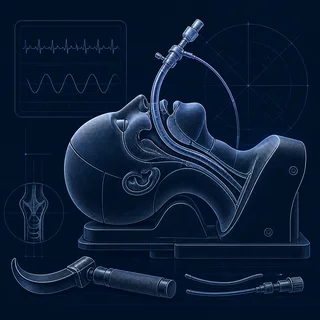
Artificial intelligence for anesthesiology board–style examination questions: Role of large language models

A. A. Khan, R. Yunus, M. Sohail, T. A. Rehman, S. Saeed, Y. Bu, C. D. Jackson, A. Sharkey, F. Mahmood, R. Matyal

Evaluated whether large language models such as ChatGPT can generate and accurately answer anesthesiology board-style multiple choice questions. Found that LLMs show promise as supplementary study and question-generation tools, while identifying key limitations for clinical education.

Journal of Cardiothoracic and Vascular Anesthesia2024
022023

Virtual reality: the future of invasive procedure training?

S. Savir*, A. A. Khan*, R. A. Yunus, T. A. Rehman, S. Saeed, M. Sohail, A. Sharkey, J. Mitchell, R. Matyal

* Co-first authors

A structured review of the evidence for virtual reality as a training modality for invasive procedures. Synthesized existing literature to argue that VR simulation can meaningfully improve procedural competence before trainees perform skills on real patients.

Journal of Cardiothoracic and Vascular Anesthesia2023
032024

Virtual reality training for central venous catheter placement: an interventional feasibility study

S. Savir*, A. A. Khan*, R. A. Yunus, P. Gbagornah, N. Levy, T. A. Rehman, S. Saeed, A. Sharkey, C. D. Jackson, F. Mahmood, J. Mitchell, R. Matyal

* Co-first authors

An interventional feasibility study incorporating a VR module into the standard central venous catheter training curriculum for novice trainees. Demonstrated that VR can be practically integrated into residency education and showed measurable improvements in procedural performance.

Journal of Cardiothoracic and Vascular Anesthesia2024
042023

Novel three-dimensionally printed ultrasound probe simulator and heart model for transthoracic echocardiography education

Y. Bu, A. Sharkey, R. Bose, T. A. Rehman, S. Saeed, A. A. Khan, R. Yunus, F. Mahmood, R. Matyal, S. Neves

Developed and validated a low-cost 3D-printed ultrasound probe simulator and cardiac phantom for teaching transthoracic echocardiography to novice learners. Demonstrated that physical simulation using 3D-printed models can provide accessible, hands-on ultrasound training outside the clinical environment.

Journal of Cardiothoracic and Vascular Anesthesia2023
052021

Deep learning applications in neuro-oncology

A. A. Khan, H. Ibad, K. S. Ahmed, Z. Hoodbhoy, S. M. Shamim

A comprehensive review of deep learning methods for diagnosing, grading, and managing brain tumors. Surveyed how convolutional neural networks and other deep learning architectures can interpret MRI and histopathology data to assist neuro-oncology decision-making, and identified key barriers to clinical translation.

Surgical Neurology International2021
062023

Commentary: Welcome to the machine

A. A. Khan, K. R. Khabbaz

An invited editorial commenting on the application of machine learning to cardiac surgery decision-making and outcomes prediction. Explores the promise and limitations of algorithmic tools entering the cardiothoracic surgical workflow.

Journal of Thoracic and Cardiovascular Surgery2023

* Co-first authorship is marked alongside author names.

View full publication list

Digital tools for
clinical practice.

Avid app creator building practical digital tools for learners and clinicians.

01 / ANESTHESIA EDUCATION

anes360.com

Anesthesia education for clinicians in training, with specialty learning presented in a clear, focused way.

Built by Adnan A. Khan, MD, as one of his practical digital tools for learners and clinicians.

Visit anes360.com
02 / CLINICAL COMMUNICATION

ortranslator.com

A practical operating-room communication resource, bringing clarity to the language clinicians use on the job.

Built by Adnan A. Khan, MD, as one of his practical digital tools for learners and clinicians.

Visit ortranslator.com
03 / PAIN LEARNING

paincases.com

Case-based learning across pain procedures and chronic pain, with clinical scenarios that make complex questions easier to explore.

Built by Adnan A. Khan, MD, as one of his practical digital tools for learners and clinicians.

Visit paincases.com
04 / RESEARCH DISCOVERY

anesthesiapapers.com

A straightforward way to discover anesthesia research, with papers from the specialty brought into easier reach.

Built by Adnan A. Khan, MD, as one of his practical digital tools for learners and clinicians.

Visit anesthesiapapers.com

Good work starts
with a question.

email@khan.health